Organizations rarely fail because one dependency exists. They fail because the dependency was invisible, misunderstood, overloaded, or treated as someone else’s concern until the moment it constrained everything.
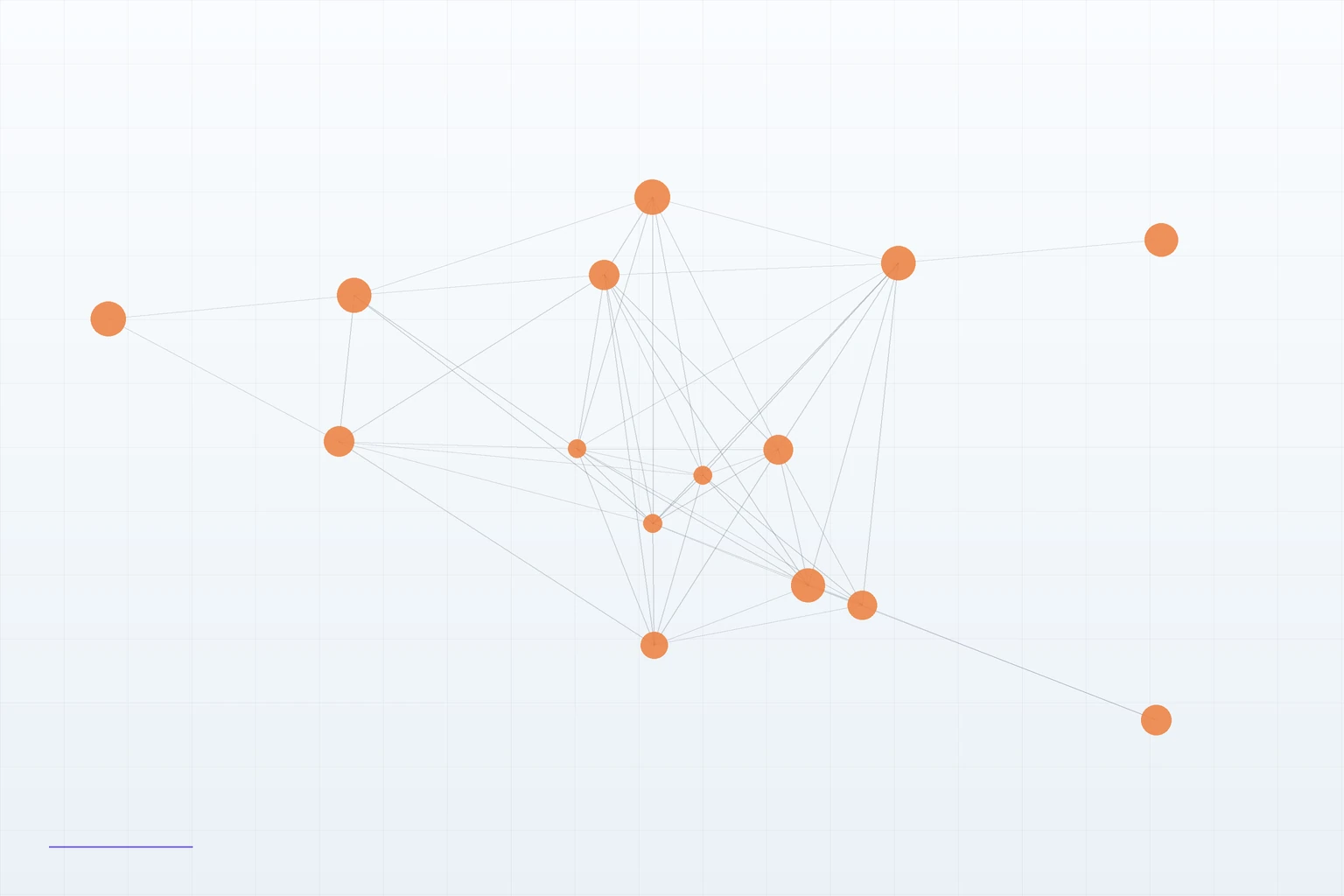
Modern work is built from chains: vendors, platforms, approvals, data flows, environments, people, services, policies, and informal knowledge. Each link may look manageable in isolation. The risk lives in the connections.
The dependency visibility problem is the gap between what the organization thinks it can control and the system it actually depends on. Resilience begins when leaders stop treating dependencies as background details and start mapping how value really moves.
Nothing Important Stands Alone
The first discipline is seeing interdependence before it becomes a failure path. Systems often look modular from the outside, especially when teams, tools, and vendors each have their own owners. But real work crosses those boundaries.
Andrew Hunt and David Thomas quote John Muir in The Pragmatic Programmer: “When we try to pick out anything by itself, we find it hitched to everything else in the Universe” [[The Pragmatic Programmer]] That is a software principle, an organizational principle, and a supply-chain principle.
Dependencies are not inherently bad. They are how organizations create leverage. The danger is pretending that leverage is independence. A team that does not know what it is hitched to cannot understand its true risk, speed, cost, or resilience.
The System Is the Unit of Performance
Leaders often inspect functions one at a time: engineering, operations, procurement, finance, security, support, delivery. Each function can appear competent while the whole system remains fragile. Local excellence is not the same as system performance.
In The Phoenix Project, Gene Kim, Kevin Behr, and George Spafford make the systems view concrete: “A manufacturing plant is a system. The raw materials start on one side, and a million things need to go just right in order for it to leave as finished goods as scheduled out the other side.” [[The Phoenix Project]] Digital work has the same shape, even when the raw material is a request, an idea, a ticket, or a line of code.
The leadership question is not only whether each function is doing its job. It is whether the path across functions can actually produce the promised outcome. Dependencies become visible when the organization follows the work instead of the org chart.
Growth Hides the Map
Dependency problems often grow during success. More customers, more products, more teams, more tools, more vendors, more environments. The organization celebrates scale while the operating map becomes harder to see.
Jim Collins describes the pattern in Good to Great: “What was once great fun becomes an unwieldy ball of disorganized stuff.” [[Good to Great]] That line is painfully familiar to many technology leaders. The early system worked because everyone could see enough of it. The scaled system fails because no one can.
At a certain size, informal knowledge becomes risk. The person who knows the vendor workaround. The team that understands the deployment sequence. The spreadsheet that governs a critical decision. The undocumented dependency that everyone assumes someone else owns. Growth turns these small gaps into structural exposure.
Familiar Risk Feels Smaller Than It Is
Organizations are vulnerable to the risks they have normalized. If a dependency has not failed recently, it feels stable. If a manual workaround always saves the day, it feels acceptable. If only one team understands a system, it feels efficient until that team is unavailable.
Thaler and Sunstein describe the perception problem in Nudge: “If we don’t know anybody who’s had a stroke, we automatically assume that there’s only a low risk that we’ll have one.” [[Nudge]] The same bias appears in operating systems. Leaders underestimate unfamiliar or unexperienced failure modes because absence of memory feels like absence of risk.
Resilience requires imagination disciplined by evidence. What has never failed but would be catastrophic if it did? Which vendor, person, service, workflow, or approval path quietly controls throughput? What risk feels small only because the organization has not yet paid for ignoring it?
Constraints Decide the Real Plan
Every organization has constraints, whether or not leaders name them. A constrained reviewer, a brittle integration, a manual approval, a vendor queue, an overloaded platform team, a scarce security specialist, or a fragile environment can determine the pace of the whole system.
A daily note defines the theory directly: “a management paradigm that views any manageable system as being limited in achieving more of its goals by a very small number of constraints.” [[daily note/Notes Bodies4/0001]] The important phrase is “very small.” Most systems are not limited everywhere. They are limited somewhere important.
Visibility turns constraints from surprises into design inputs. Once the constraint is known, leaders can protect it, elevate it, route around it, reduce demand, or change the system. Without visibility, the organization keeps optimizing everywhere except the place that determines performance.
So, What Is Your Organization Depending On Without Seeing It?
The dependency visibility problem asks leaders to inspect the hidden structure beneath delivery. Which workflows depend on a single person? Which promises rely on vendor behavior the organization does not control? Which platforms have become load-bearing without explicit ownership? Which decisions require information that lives outside the system of record?
The point is not to eliminate dependencies. That would eliminate leverage. The point is to know which dependencies matter, which ones are fragile, which ones are strategic, and which ones have become accidental.
Resilient organizations map the work before it breaks. They understand the path from idea to value, from request to fulfillment, from failure to recovery. They do not wait for disruption to reveal the system. They make the system visible while they still have choices.